Source Woven Breathable Sheer Curtain Fabric for Home Hotel Cafe
Compare 30 listings of Woven Breathable Sheer Curtain Fabric from verified Chinese suppliers. Buyers can evaluate specifications like weight, width, and customization options for living rooms, hotels, and cafes.
Key considerations
Products List




Comprehensive Sourcing Guide
Strategic Sourcing Guide for Woven Breathable Sheer Curtain Fabric
Understanding Technical Specifications and Material Composition
When sourcing Woven Breathable Sheer Curtain Fabric, buyers must first establish a clear understanding of the technical parameters that define product performance. The core material composition for many high-volume offerings in this category is 100% Polyester. This fiber type is selected for its durability, resistance to shrinking, and ability to maintain structural integrity under varying humidity conditions. The fabric construction often utilizes filament fibers, which contribute to a smooth texture and consistent drape. In terms of physical structure, the textile may be produced using weft knitting technics or woven processes, depending on the specific design requirements for breathability and light filtration.
The weight of the fabric is a critical determinant of its opacity and flow. Observed specifications indicate a weight range of 50 to 200 GSM (grams per square meter). Lighter weights, such as those in the 50-150 GSM range, typically offer a more ethereal, sheer quality suitable for maximum light transmission. Heavier variants, reaching up to 200 GSM, may provide a slightly more substantial drape while still maintaining the "sheer" classification. The width of the fabric is equally important for manufacturing efficiency; standard widths observed in the market range from 150cm to 320cm, with specific models occasionally listed at 110 inches. Buyers should verify the exact width required for their production lines to minimize waste during cutting.
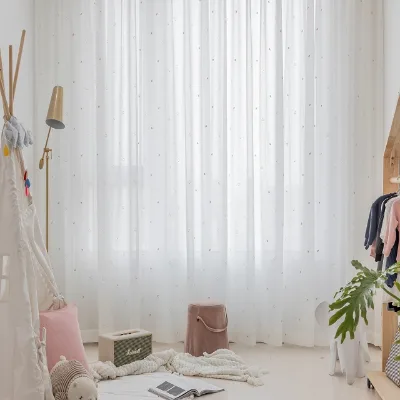
The surface finish and aesthetic style are equally vital. The fabric is frequently available in an embroidered style, ranging from plain patterns to complex multicolor designs. Specific styles include "Bronzed" finishes or "Dolly Embroidered" variations, which add texture and visual interest. The production technology often involves dyeing processes to achieve the desired color palette. It is essential to distinguish between different fabric standards, such as "Voile Curtain" and "Blackout Curtain Fabric," as the latter implies a different functional intent despite potential overlaps in material composition. The formaldehyde concentration in the final product is a key safety metric, with some specifications noting levels below 0.30mg/m³, a figure that buyers should request verification for in all shipments.
Compliance, Certification, and Safety Standards
Navigating the compliance landscape for textile imports requires rigorous attention to safety and quality standards. While specific third-party certifications like SGS are listed as product standards for certain models, buyers must not assume all inventory carries these marks without explicit confirmation. The market data indicates that some products adhere to standards such as "SHEER/VOILE CURTAINS" or "FOIL PRINTING" processes, but these are often internal or trade-specific classifications rather than universal international safety certifications.
Buyers should prioritize verifying the presence of recognized international safety standards, such as EN13501 for fire resistance or ISO 18184 for formaldehyde testing, even though these are not explicitly confirmed for every item in the current supply pool. The formaldehyde concentration limit of <0.30mg/m³ is a specific data point provided; however, for other chemical residues or flammability ratings, the buyer must request current test reports from the supplier. It is critical to understand that "Blackout Fabric" standards differ significantly from "Voile Curtain" standards, and a product labeled as sheer may not meet the opacity requirements of a blackout standard.
Furthermore, the origin of the textile plays a role in regulatory compliance. Products originating from Keqiao, Shaoxing, or general China manufacturing hubs are subject to specific export regulations. Buyers should ensure that the supplier can provide documentation confirming the product meets the import requirements of the destination country, including REACH compliance for European markets or CPSIA for the United States. The absence of a specific certification claim in the product listing does not imply non-compliance, but it does necessitate a proactive request for evidence. Relying on "trusted category knowledge" suggests that formaldehyde levels and fire ratings are the primary areas of concern for sheer fabrics used in residential and commercial settings.
Cost Drivers and Pricing Dynamics
The pricing structure for Woven Breathable Sheer Curtain Fabric is influenced by a complex interplay of material costs, production complexity, and order volume. The observed price range in the market spans from $0.06 to $100 per unit, a vast disparity that reflects differences in GSM, width, embroidery complexity, and order quantity. The lower end of the spectrum typically corresponds to plain, lightweight, non-embroidered polyester fabrics with minimal processing. Conversely, the higher price points are associated with heavy GSM weights, intricate embroidery patterns, multicolor designs, and specialized finishes like "Bronzed" or "Dolly Embroidered" styles.
Order Quantity (MOQ) is a significant factor in determining the final unit cost. The observed MOQ range extends from 1 unit to 15,000 units. Buyers purchasing small quantities may face higher per-unit costs due to the fixed overheads of setup and dyeing. As the order volume increases, particularly approaching the 15,000-unit threshold, economies of scale often drive the price down significantly. Customization is a key cost driver; while customization is available, the complexity of the design—such as specific multicolor patterns or custom widths—can add to the production time and material waste, thereby increasing the cost.
Packaging requirements also impact the final price. Options such as "Roll Packing" or "Compress Packing" are standard, but specific client requests for custom packaging or specialized labeling can incur additional charges. Additionally, the technology used, such as foil printing or specific dyeing techniques, adds a layer of processing cost. Buyers should be aware that "Low Strength" physical features noted in some specifications might correlate with lower material costs, whereas "Tear-Resistant" or "Waterproof" functional claims suggest higher-grade yarns or coatings that command a premium. Understanding these variables allows buyers to negotiate more effectively and align their budget with their specific quality requirements.
Typical Applications and Functional Performance
The versatility of Woven Breathable Sheer Curtain Fabric makes it suitable for a wide array of applications across residential, commercial, and hospitality sectors. The primary usage categories include garments, home textiles, and decoration. Within the home sector, the fabric is predominantly used for living rooms, where its sheer quality allows for natural light filtration while maintaining privacy. The "Window Curtain" and "Curtain Fabric" classifications highlight its primary function in window treatments, where it serves as a soft barrier against direct sunlight.
In commercial environments, the fabric is specified for use in hotels, hospitals, and cafes. The "Home, Hotel, Hospital, Cafe" usage list indicates a demand for fabrics that are not only aesthetically pleasing but also durable and easy to maintain. The functional attributes of the fabric, such as being "Shrink-Resistant," "Waterproof," and "Tear-Resistant," are particularly valuable in high-traffic commercial settings where frequent cleaning and rigorous use are expected. The "Folding screens" application suggests that the fabric can also be utilized in room dividers or decorative partitions, adding to its utility beyond standard window treatments.
The breathability of the fabric is a critical feature for applications requiring air circulation. While some listings mention "Blackout Curtain Fabric," the core keyword focus remains on "breathable sheer" varieties. This distinction is vital for buyers targeting energy-efficient building designs where natural ventilation is desired. The "Low Strength" physical feature noted in some data points requires careful consideration; for applications involving heavy drapes or frequent handling, buyers may need to verify if the fabric meets the necessary tensile strength requirements. Conversely, for lightweight decorative purposes, the lower strength may be acceptable and even desirable for achieving a specific fluid drape.
Supplier Evaluation and Sourcing Strategy
Evaluating suppliers for woven sheer curtain fabric requires a multi-faceted approach that goes beyond price comparison. Buyers should prioritize suppliers who demonstrate transparency regarding their production capabilities and quality control measures. The location of the supplier, such as Keqiao, Shaoxing, or other manufacturing hubs in China, can indicate access to a robust supply chain for polyester and filament fibers. However, the physical location should not be the sole criterion; the supplier's ability to provide consistent quality across different batches is paramount.
Key evaluation criteria include the supplier's responsiveness to customization requests, as customization is a confirmed available attribute. Buyers should assess the supplier's capacity to handle varying MOQs, from small trial orders of 1 unit to large-scale production runs of 15,000 units. The lead time, while not explicitly provided in the data, is a critical factor that should be discussed during negotiations. Suppliers who can provide clear timelines for production and shipping help buyers manage their inventory and project schedules effectively.
Quality assurance is another pillar of supplier evaluation. Buyers should request samples to verify the physical features, such as the GSM weight, width, and the quality of the embroidery. The presence of specific standards like "SGS" or "FOIL PRINTING" in the product description should be treated as a claim that requires verification through current test reports. Suppliers who are willing to share detailed specifications, including formaldehyde concentration levels and fiber cross-section details, are generally more reliable partners. Additionally, the supplier's packaging capabilities, offering options like "Roll Packing" or "Compress Packing," should align with the buyer's logistical needs to prevent damage during transit.
Quality Control and Long-Term Procurement Considerations
Implementing a robust quality control (QC) protocol is essential for ensuring that the sourced fabric meets the buyer's expectations. Given the observed range in physical features, such as "Low Strength" versus "Tear-Resistant," buyers must define clear acceptance criteria before production begins. QC checks should focus on verifying the material composition (100% Polyester), the weight (GSM), and the width (150cm-320cm). Visual inspections are necessary to confirm the accuracy of the embroidery style, pattern, and color consistency, especially for multicolor designs.
Long-term procurement considerations involve building a sustainable relationship with suppliers who can guarantee consistent quality over time. Buyers should establish a protocol for periodic audits and sample testing to ensure that the formaldehyde concentration remains within the specified limits (e.g., <0.30mg/m³) and that the fabric retains its functional properties like shrink-resistance and waterproofing. The variability in product models, such as BDCV-0082, BDCV-0053, and others, suggests that buyers should maintain a standardized specification sheet that references these model numbers to avoid confusion in future orders.
Furthermore, buyers should consider the environmental impact of their sourcing decisions. The use of polyester and specific dyeing technologies should be evaluated against the buyer's sustainability goals. While the data mentions "Hollow Filament" fiber cross-sections, which can offer unique thermal properties, the long-term durability and recyclability of the fabric are also important factors. Establishing clear communication channels with suppliers regarding any changes in raw material sources or production processes will help mitigate risks and ensure that the procurement strategy remains aligned with the buyer's quality and ethical standards. By focusing on these detailed aspects, buyers can secure a reliable supply of high-quality Woven Breathable Sheer Curtain Fabric that meets both functional and aesthetic requirements.
FAQs
What material is used for Woven Breathable Sheer Curtain Fabric?
The fabric is primarily made of 100% Polyester. This material ensures durability and resistance to shrinking while maintaining a smooth drape suitable for various home textile applications.
Can I find customized embroidery styles for this fabric?
Yes, customization is available for this product line. Buyers can select from styles like embroidered, jacquard, or plain patterns to meet specific design requirements for garments or home decoration.
What is the typical weight range for this curtain fabric?
The weight typically ranges from 50 to 200 GSM. Lighter variants around 50-150 GSM offer a sheer quality, while heavier options up to 200 GSM provide a more substantial drape.
Which standards apply to the formaldehyde concentration in the fabric?
Some specifications indicate a formaldehyde concentration of less than 0.30mg/m³. Buyers should verify this safety metric with current test reports to ensure compliance with import regulations.
How wide is the Woven Breathable Sheer Curtain Fabric available?
Standard widths range from 150cm to 320cm, with some specific models listed at 110 inches. This variation allows manufacturers to minimize waste during cutting for different production lines.
What are the functional properties of this curtain fabric?
The fabric offers functional properties such as being shrink-resistant, waterproof, and tear-resistant. These features make it suitable for high-traffic commercial environments like hotels and hospitals.